
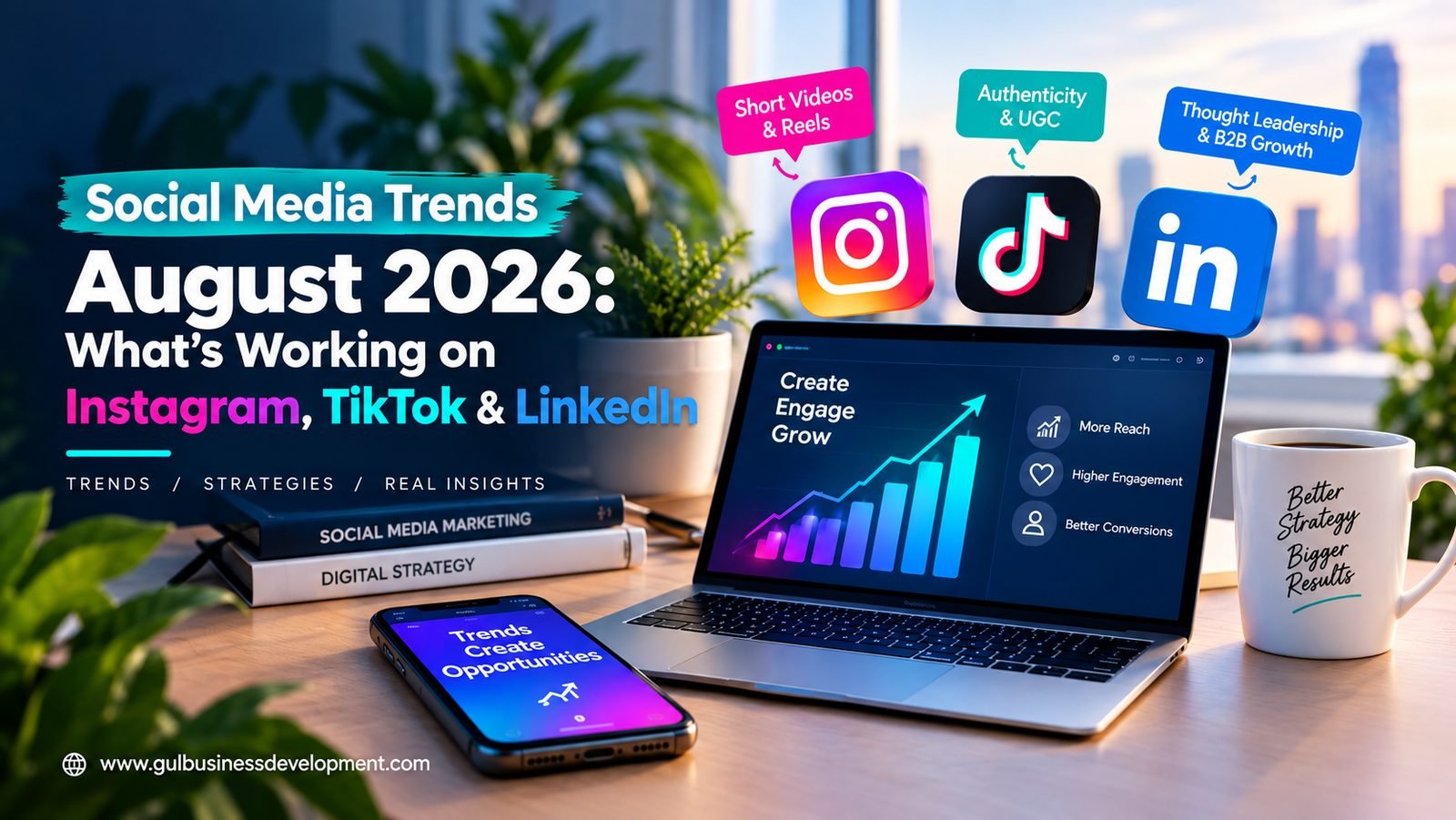
A social media marketing strategy is a documented plan that connects your posts, videos, conversations, and campaigns to a business outcome. That outcome might be enquiries, website visits, product sales, bookings, brand awareness, or repeat purchases. Without a goal, a page can look busy while doing very little for the business.
In 2026, small businesses compete with creators, established brands, and a constant flow of short-form video. You do not need to publish everywhere or copy every trend. You need a clear audience, a recognisable message, useful content, consistent execution, and a way to measure what is working.
1. Start with one measurable objective
Choose one primary goal for the next 60 to 90 days. For example, generate qualified enquiries, increase visits to a service page, grow sales of a specific product, or improve repeat customer engagement. A goal helps you decide what to publish and what metrics matter.
Make the goal specific enough to review. Instead of saying “get more engagement,” track meaningful actions such as messages from potential customers, link clicks, product page visits, booked calls, or completed purchases. Follower growth can be useful, but it should not be the only measure of success.
Connect each campaign to a next step. If a post introduces a service, send people to a relevant service page or invite them to ask a clear question. If a post explains a product, provide accurate details and an easy way to buy or enquire.
2. Define the audience before choosing platforms
Describe the people you want to reach: their needs, questions, buying concerns, location, budget range, and the information they need before making a decision. Use real customer conversations, enquiries, reviews, and sales questions to develop this picture rather than relying on assumptions.
Then choose platforms based on audience behaviour and the content you can consistently produce. Instagram can suit visual products, demonstrations, and short educational videos. Facebook can support local communities, customer conversations, and some paid campaigns. LinkedIn can be useful for business-to-business expertise and professional services. TikTok and YouTube Shorts can help explain ideas through video, while YouTube supports deeper tutorials and demonstrations.
These are starting points, not rules. Check where your existing customers engage and where your competitors receive meaningful questions. It is better to manage two relevant channels well than to open six accounts that remain inactive.
3. Build three to five content pillars
Content pillars are recurring themes that keep publishing focused. A service business might use educational tips, common customer problems, process explanations, case studies, and company updates. A product business might use product demonstrations, ingredient or feature education, customer questions, usage instructions, and behind-the-scenes content.
Give each pillar a purpose. Educational posts help people understand a problem. Demonstrations show how a product or service works. Proof-based content can build confidence when it uses genuine reviews, real examples, or documented results. Human stories make the brand more familiar. Promotional posts explain the offer and how to take the next step.
Balance your content so every post is not a sales pitch. A practical starting mix is to make most posts educational, useful, or relationship-building, with a smaller share focused directly on offers. Adjust this based on your analytics and business model rather than treating any ratio as universal.
4. Create content that answers real questions
Your strongest content ideas often come from the questions customers ask before buying. Write down recurring questions about price, suitability, delivery, results, process, timelines, and after-sales support. Turn each question into a short video, carousel, story, post, or longer guide.
Lead with the answer. A video should communicate its subject in the opening seconds; a carousel should make the benefit clear on its first slide; and a caption should not hide the main point below a long introduction. Use plain language and specific examples. Avoid exaggerated promises and claims you cannot support.
Repurpose ideas thoughtfully. One useful guide can become a short video, a carousel, a story Q&A, and a LinkedIn post. Adapt the format and opening for each platform rather than copying the same caption everywhere. Add captions to videos so people can follow without sound, and use readable text and strong contrast in graphics.
5. Make a realistic content calendar
A calendar reduces last-minute stress and helps you maintain consistency. Plan a week or month at a time. For every post, record the topic, audience question, format, platform, call to action, asset needed, owner, and planned publishing date.
Choose a frequency your team can maintain. Three thoughtful posts per week can be more useful than daily posts that repeat the same message. Batch related work: outline several ideas together, record multiple short videos in one session, and prepare designs before the publishing date.
Leave room for timely posts and genuine conversations. A calendar is a guide, not a reason to ignore a relevant customer question or a changing business priority. Review the plan weekly and move content when necessary.
6. Treat community management as part of marketing
Publishing is only one part of social media management. Replying to comments, answering direct messages, acknowledging feedback, and directing people to the right information all influence the customer experience.
Set a response process. Decide who checks messages, what information can be shared publicly, which enquiries should move to a private channel, and when a question needs a specialist or manager. Do not promise a result, price, delivery date, or policy unless it is confirmed.
Use recurring questions as research. If several people ask the same thing, improve the caption, service page, product description, or FAQ. Social conversations can reveal confusion in your offer before it becomes a larger sales problem.
7. Use paid promotion selectively
Organic content and paid advertising serve different roles. Organic posts help demonstrate expertise and build relationships over time. Paid campaigns can help reach a defined audience or promote a specific offer, but they cannot repair a confusing landing page or weak sales process.
Before boosting a post or launching an ad, define the audience, objective, offer, budget, destination, and success metric. Use a relevant landing page or clear messaging destination. Track enquiries and sales where possible, not just likes or reach. Start with a controlled test, learn from the results, and change one major variable at a time when practical.
Do not assume that a large audience automatically creates sales. Relevance, trust, offer clarity, and the next step matter just as much as exposure.
8. Measure results and improve monthly
Review metrics that connect to your goal. Reach and impressions show distribution. Saves and shares can indicate that content is useful enough to revisit or pass along. Profile visits and link clicks show interest. Qualified messages, leads, bookings, and purchases are closer to business outcomes.
Compare similar posts rather than judging a format from one result. Look for patterns: which topics attract the right questions, which videos retain attention, which calls to action produce enquiries, and which posts reach people who actually buy. Use those findings to plan the next month.
Keep a simple monthly report with three parts: what worked, what did not work, and what you will test next. This turns social media from guesswork into a repeatable process.
Common mistakes to avoid
Do not buy followers, copy competitors word for word, use trends that do not fit the brand, or publish unverified claims. Avoid treating every platform as identical, ignoring messages, and measuring success only by likes. Do not change your strategy every few days based on one post.
Consistency means maintaining a clear direction and learning over time; it does not mean refusing to adapt. Make changes based on customer feedback, performance patterns, and business priorities.
A simple 30-day action plan
Week 1: choose the primary goal, define the audience, review existing profiles, and list the questions customers ask most often. Select two priority platforms.
Week 2: create three to five content pillars, prepare a calendar, update profile descriptions and contact links, and produce a small batch of useful content.
Week 3: publish consistently, reply to comments and messages, and test different formats or openings while keeping the core message clear.
Week 4: review meaningful metrics, identify the strongest topics, improve weak calls to action, and plan the next month around what you learned.
Frequently asked questions
How often should a small business post? Start with a manageable schedule you can sustain, such as two or three useful posts each week, and adjust according to audience response and available resources.
Which social media platform is best? The best platform is where your target customers are active and where you can publish relevant content consistently. Review your own data before expanding.
Do hashtags guarantee reach? No. Hashtags can add context and discoverability, but content relevance, audience response, platform recommendations, and distribution also matter.
Should I hire a social media manager? Consider support when content planning, design, publishing, community replies, or reporting are taking time away from core business work or are being handled inconsistently.
How soon will social media generate sales? There is no guaranteed timeline. Results depend on the offer, audience, trust, competition, content quality, and how well enquiries are handled.
Conclusion and next step
A practical social media strategy is not about posting as much as possible. It is about reaching the right people with useful content, building trust through consistent communication, and giving interested customers a clear next step. Begin with a measurable goal, a focused platform choice, repeatable content pillars, and a monthly review.
If you want help planning, creating, and managing content for your business, Gul Business Development can help you organise your social media presence around your goals. Visit the website’s contact page to discuss your requirements and choose a realistic plan.
Suggested featured image alt text: Small business social media marketing planning content across multiple platforms